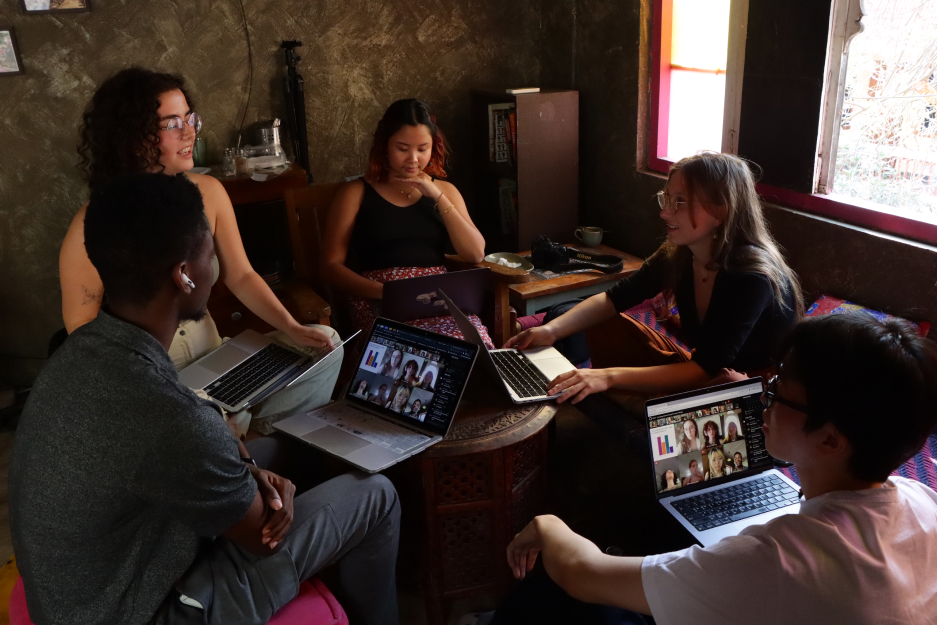

At Minerva, research is one of the main ways students engage with ideas, test assumptions, and apply knowledge across contexts. It spans disciplines and global settings, encompassing scientific investigation, reflective analysis, creative work, and applied problem-solving.
Students and faculty collaborate around the world through both Minerva-led initiatives and partnerships with external organizations.
Rather than limiting research to a single stage of the academic journey, research is integrated throughout the undergraduate experience:
%20(1).jpg)

At Minerva, students begin engaging in research early and build toward increasing independence and depth over time.
From their first year, students apply what they learn to real challenges, working across disciplines and contexts as they move.
.jpg)
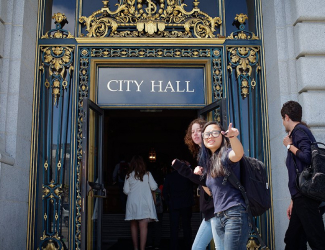
Students apply what they learn to real-world challenges in collaboration with community organizations, institutions, and industry partners through civic projects in different global cities.
Projects are grounded in the cities where students live and study, helping students apply their learning to real life. Working in teams, students engage directly with professionals, receive mentorship, and develop solutions that respond to real needs.
This work spans areas such as public policy, sustainability, AI, mathematics, and global systems, and often results in tangible outputs such as research, policy recommendations, or product concepts.
Examples from cornerstone civic projects include:
Minerva students extend their learning beyond the classroom through internships, research partnerships, and work-based experiences with organizations around the world. Working alongside researchers, startups, nonprofits, corporations, and public institutions, students apply their skills to real-world challenges while building professional experience and networks.
These opportunities often serve as launchpads for graduate study, research careers, and entrepreneurship.
In their final year, students complete a Senior Capstone Project, an in-depth, faculty-guided project that brings together the skills, perspectives, and experiences developed throughout their Minerva journey.
Capstone projects span a wide range of disciplines and formats, including:
Research studies
Policy analysis
Entrepreneurial ventures
Creative and design-based work
Data and AI applications
Sustainability and systems-focused projects
Students work closely with faculty mentors while exploring complex real-world questions connected to their academic and professional interests.

Capstone projects have explored:
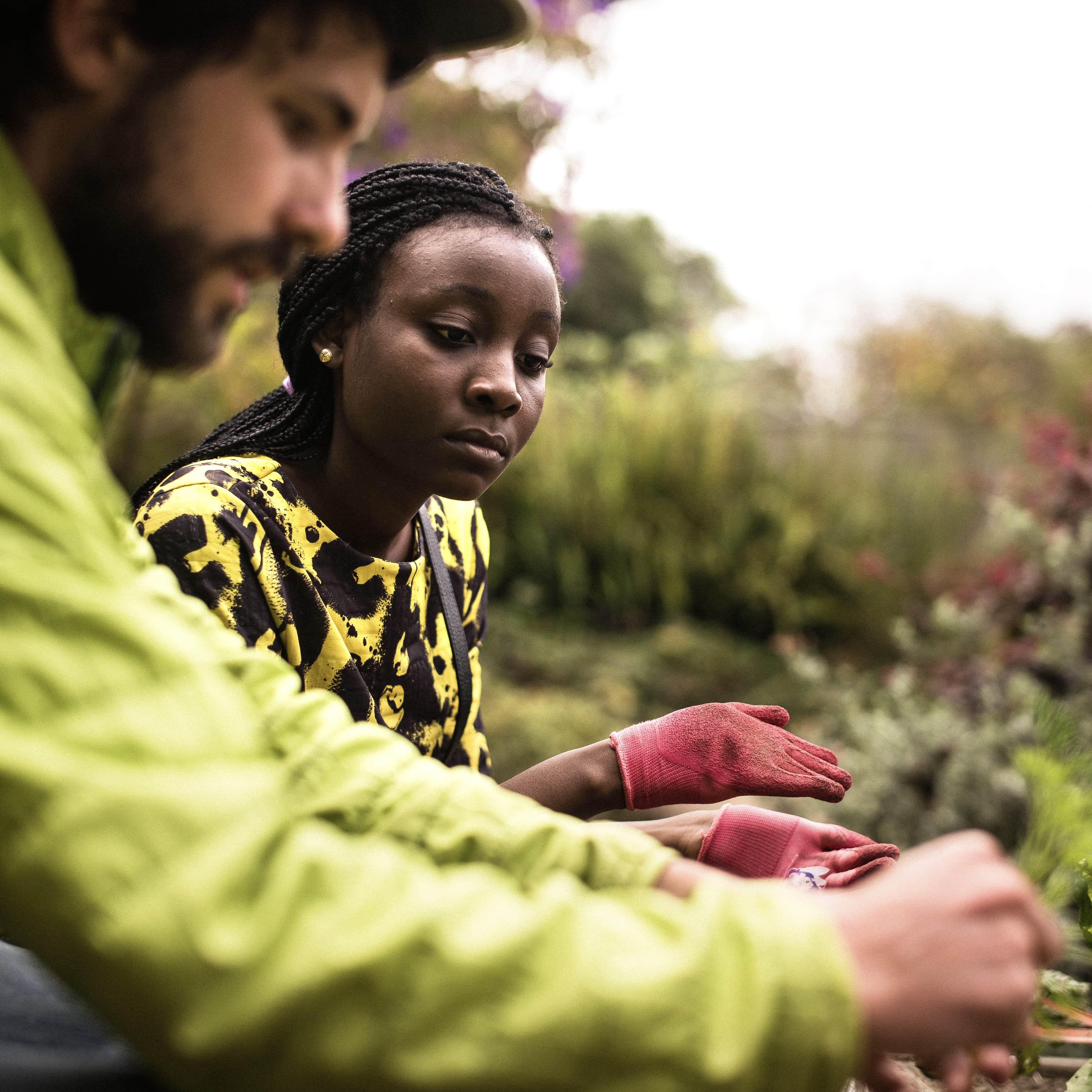
Sustainable food systems and environmental resilience
AI and governance frameworks
Public health and global equity
Financial systems and institutional innovation
Civic engagement and social impact initiatives
More than a culminating academic project, the Capstone is an opportunity to create work that can shape what comes next. Students have used their Capstones to showcase their expertise to employers, strengthen graduate school applications, and even launch new ventures.
Notable Capstone Projects
Minerva faculty lead research, scholarly and creative work across all five colleges, spanning fields such as:
Natural Sciences and Bioinformatics
Social Sciences and Public Policy
Computational Sciences and AI
Arts, Humanities, and Communication
Business and Organizational Systems
Faculty research extends beyond traditional publications and conference presentations into applied work that addresses critical global challenges—often through collaborations with external partners or through their own NGOs.
Students frequently work directly with faculty on research and applied initiatives, gaining mentorship and hands-on experience.
Examples of faculty-led initiatives and partnerships include:
Citizenship Coalition — supporting immigrants preparing for the U.S. citizenship exam
SAYDS — empowering youth civic engagement and public policy action in Kenya and globally
Sustainability Policy Research Initiative — Faculty and students collaborate on applied sustainability research across global contexts, producing work that has been presented at international conferences and published in peer-reviewed proceedings.
.jpg)
Kaoru Yokomori presents "The Localization Gap: Structural and Cultural Barriers in Sustainable Development Policy," at the International Conference on Environmental and Economic Impact on Sustainable Development in Bristol, UK, sharing findings from fieldwork conducted across multiple global cities.
.png)
"I am genuinely grateful that Minerva's structure allowed me to be involved in research and publication from such an early stage. That kind of opportunity simply does not exist at most universities, especially in the first three years."
- Kaoru Yokomori
Research at Minerva is organized through labs, collaborative initiatives, and interdisciplinary projects that provide opportunities for students and faculty to engage with ongoing work across disciplines and global contexts.

Students and faculty collaborate with:
Local institutions and universities
Industry and nonprofit organizations
Government and policy systems
Research and innovation partners around the world
From scientific research to policy analysis and applied problem-solving, the work is shaped by the environments and communities in which it takes place.


Minerva’s approach to research is grounded in application.
Students learn to:
Ask meaningful questions
Analyze complex systems
Test ideas across contexts
Translate insight into action
Explore how our curriculum, global immersion, and interdisciplinary approach prepare students to tackle complex challenges and create meaningful impact.